
NOVEMBER 4, 2026
Teaching Young Hunters the Importance of Ethical Field Communication and Non-Verbal Cues
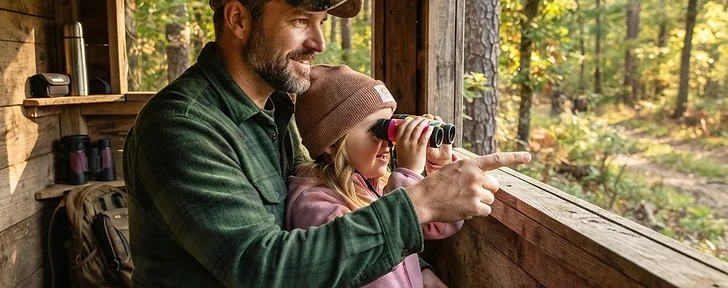
Introduction to Field Communication
Communication in the woods is the backbone of both safety and success when hunting with a child. Whether you are in a ground blind or sitting on a stump in the timber, your ability to communicate effectively without startling game is a skill that takes practice. For young hunters, learning to communicate quietly and ethically is part of what makes them a respectful and skilled sportsman. As a parent, your role is to teach them that the woods are a place of quiet observation, where volume and movement should be kept to an absolute minimum.
Why Silent Communication Matters
Beyond simply not scaring away the deer, quiet communication is a fundamental aspect of hunting ethics. When we move through the woods with unnecessary noise—be it talking, clanking gear, or rustling clothes—we are disrupting the environment. Teaching your child to communicate through subtle cues shows respect for the wildlife and the natural surroundings. It also keeps you and your young hunter focused and connected, allowing you to work as a cohesive team.
Developing a Non-Verbal Language
Before you even step into the field, sit down with your child and establish a system of non-verbal cues. This helps eliminate the need to whisper or ask "what did you see?" during a hunt. Here are a few simple methods to incorporate into your pre-hunt training:
- Hand Signals: Use simple, pre-agreed hand signs to indicate directions (left, right, behind) or to signal the presence of wildlife. A slow, steady point is usually better than a quick, jerky motion.
- The 'Stop' Signal: Establish a specific hand gesture that means "freeze immediately." This is crucial when wildlife is approaching, and you need to ensure everyone is still to avoid detection.
- Eye Contact: Often, a subtle nod or a brief look followed by a slight shift of the eyes is all it takes to communicate a target's location to your child.
- Tapping: A soft, rhythmic tap on the child’s knee or shoulder can signal that you have spotted something or that it is time to shift focus.
Teaching Ethical Observation and Restraint
Communication isn't just about spotting game; it's about decision-making. When you observe wildlife, use your communication system to guide your child through the process of identification. Ask them to signal you when they have positively identified the animal's species and legality. This creates a collaborative, educational environment where the child feels empowered to make the right call based on the criteria you have practiced together.
Practicing Before You Go
Role-playing these scenarios at home or in your backyard is the best way to ensure they become second nature. Have your child sit in a chair while you walk through the yard. Practice your hand signals until your child can respond to them without hesitation. This reduces anxiety in the field and builds the confidence they need to feel like a true hunting partner. Remember to keep the tone encouraging and patient; if they miss a signal, take it as an opportunity to review and refine your system.
Legal and Safety Reminders
Always remember that while communication aids in your hunt, it never replaces the fundamental rules of safety. Regardless of how you communicate, your firearm should always be pointed in a safe direction, and you must stay within the legal guidelines for your specific area. Always check your state wildlife agency for specific regulations regarding equipment and hunting techniques.
Building this shared language is a journey that grows over time. By prioritizing non-verbal communication, you are teaching your child to value the stillness and integrity of the hunt. Start your journey today by exploring our age-matched safety modules at BHH Youth Hunters Academy, where we provide the tools to help you and your child grow together in the field.
TRY IT — A REAL ACADEMY DECISION DRILL
The Silent Signal

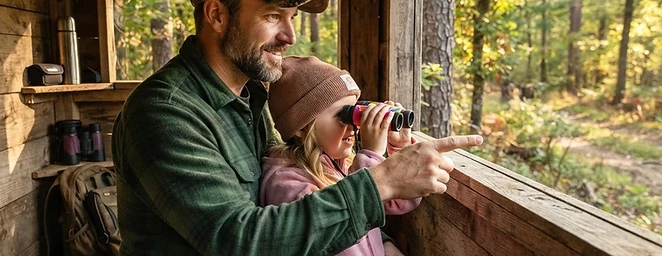
You and your child are sitting in a ground blind. You spot a deer moving through the brush to the left, but your child is currently looking in the opposite direction. You need to alert them without making a sound that could spook the animal.
What is the safest and most ethical way to alert your child?
STEP ONE FOR EVERY YOUNG HUNTER
Hunter Education comes first
Most states require a Hunter Education certificate before a young hunter can buy a license, and it is the most important training your child will get. The Academy builds the habits at home. Your state's official course makes them count.
HUNTING SAFETY EDUCATION · AGES 5-17
RAISE A SAFE, CONFIDENT YOUNG HUNTER.
Guide your kids through interactive hunting safety missions, real decision drills, and earned trophies. One payment, no subscription.