
OCTOBER 27, 2026
Teaching Young Hunters the Importance of Sunlight and Time Management in the Field
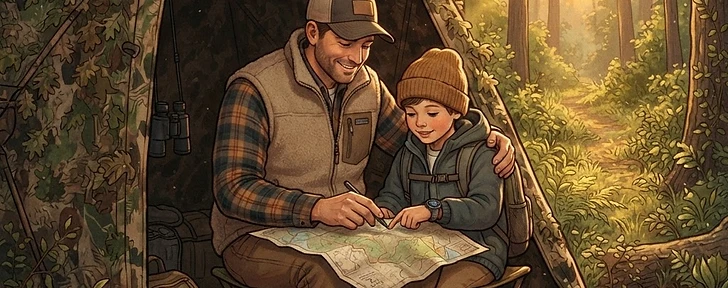
Mastering the Clock: Why Time Management Matters in the Woods
When we introduce children to the world of hunting, we often focus on marksmanship, identification, and equipment. However, one of the most overlooked aspects of safety is the concept of time management. As a parent, you know that the woods can change dramatically when the sun dips below the horizon. For a young hunter, the transition from daylight to dusk is not just a change in visibility—it is a critical shift in safety requirements.
The Critical Window of Visibility
Nature operates on a strict schedule. Teaching your child about the 'Golden Hour' of hunting—the period just after sunrise and just before sunset—is essential. However, you must also teach them that these times dictate more than just animal movement; they dictate our safety window.
Before heading out, spend time with your child reviewing the sunset time for your specific area. If you plan to be in a ground blind or tree stand, discuss the necessity of ending the hunt early enough to navigate back to your vehicle while there is still ample ambient light.
Developing a Pre-Hunt Time Plan
Creating a 'Hunt Schedule' is a great way to build responsibility. Sit down with your child the night before and map out the following:
- Departure Time: When we need to leave the house to arrive at the parking area.
- Hike-in Buffer: Adding extra time for the walk to the site, keeping the pace slow and quiet.
- Setup Time: Allowing for gear arrangement and settling in.
- The Hard Cut-off: The exact time the hunt ends to ensure a safe exit.
Why Daylight Matters for Safety
As daylight fades, depth perception diminishes and natural landmarks become harder to identify. A trail that looks perfectly clear at 2:00 PM can become confusing and hazardous at 6:30 PM. Teaching your child to recognize these shifts helps build their situational awareness.
If you find yourself in a situation where light is fading faster than expected, emphasize that safety takes priority over staying out later. There is no trophy worth the risk of navigating uneven terrain in total darkness without proper preparation.
Practical Lessons in Field Preparedness
To ensure your young hunter understands the importance of these constraints, consider these exercises:
- Use a standard watch: Teach them to check their watch or a dedicated hunting timer frequently, rather than relying solely on their phones.
- Landmarks and Light: During your walk in, ask your child to identify key landmarks. Ask them, 'If it were dark, would this bush or that stump look different?'
- The Gear Check: Ensure they carry a reliable headlamp with fresh batteries, even if you don't plan on staying past sunset. This teaches the habit of always being prepared for a delay.
Ethical Hunting and Time
Ethical hunting is about making choices that respect both the animal and the hunter. Rushing to recover game because you 'ran out of daylight' is a recipe for errors. By teaching your child to manage their time effectively, you are also teaching them to be more patient, more observant, and ultimately, a more ethical steward of the woods.
Remember, your role as a mentor is to guide them through these lessons before they ever step into the field alone. Start your journey into these safety basics by exploring the structured, age-matched safety lessons available at BHH Youth Hunters Academy today.
TRY IT — A REAL ACADEMY DECISION DRILL
The Sunset Decision

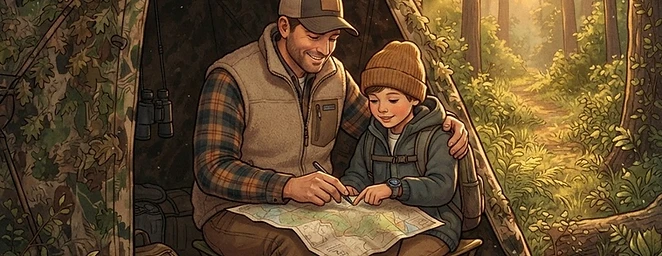
You and your child are sitting in your ground blind. It is 15 minutes before official sunset. You notice your child is becoming distracted and the forest floor is starting to grow dark, making it harder to spot small trail markers.
What is the best course of action to take as a mentor?
STEP ONE FOR EVERY YOUNG HUNTER
Hunter Education comes first
Most states require a Hunter Education certificate before a young hunter can buy a license, and it is the most important training your child will get. The Academy builds the habits at home. Your state's official course makes them count.
HUNTING SAFETY EDUCATION · AGES 5-17
RAISE A SAFE, CONFIDENT YOUNG HUNTER.
Guide your kids through interactive hunting safety missions, real decision drills, and earned trophies. One payment, no subscription.