
AUGUST 4, 2026
Teaching Young Hunters How to Navigate Terrain and Field Conditions Safely
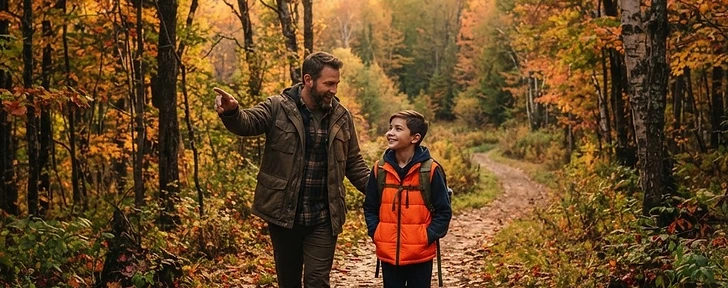
Understanding the Landscape Beyond the Target
When we introduce children to the outdoors, we often focus heavily on firearm safety and marksmanship. While these are the cornerstones of the sport, true hunting proficiency includes the ability to navigate the environment itself. For a young hunter, the woods can be a maze of uneven ground, shifting weather patterns, and hidden obstacles. Teaching your child how to read the landscape is as critical as teaching them how to use a scope.
Assess the Terrain Before You Step
Before you ever leave the truck, teach your child to conduct a visual scan of the terrain. Is the ground muddy, rocky, or covered in thick brush? Does the slope look steeper than it appears on the map?
- Stay on Marked Trails: When moving to or from a hunting location, encourage your child to stay on established paths whenever possible to avoid slips and trips.
- The Three-Point Rule: Teach them to always maintain three points of contact when traversing steep or uneven ground. This could mean two feet and one hand, or one foot and two hands if they are carrying gear.
- Scanning Downwards: It is common for new hunters to be so focused on the horizon—looking for game—that they forget to watch their feet. Remind them that a safe hunter looks where they are going first, and then scans for game once they are in a stable position.
Managing Weather and Environmental Stressors
Environmental fatigue is a leading cause of poor decision-making in the field. When a child becomes too cold, hungry, or physically exhausted, their reaction time slows down and their ability to process safety protocols diminishes.
The Layering Strategy
Teach your child how to manage their body temperature before they get uncomfortable. If they are sweating, they are likely wearing too much; if they are shivering, they are wearing too little. Moisture-wicking base layers are a non-negotiable part of a young hunter’s gear, as wet clothing draws heat away from the body rapidly.
The Importance of Frequent Breaks
Do not push for the longest hike on the first trip out. Frequent, short breaks allow you to re-evaluate your child's physical state. Use these breaks to hydrate and fuel up with high-energy snacks. A well-fed, hydrated child is a much safer hunting partner than one running on empty.
Navigating Obstacles and Vegetation
Dense brush can be dangerous for a child carrying a firearm. It is easy for a muzzle to become obstructed by mud or debris if a child falls or brushes against the ground.
If you are walking through thick cover, always keep the firearm unloaded or securely slung, and ensure your child is walking at a pace that allows them to maintain total control of the firearm. If they stumble, they must be trained to keep the muzzle pointed in a safe direction and avoid using the firearm as a walking stick. A firearm is a tool for hunting, never a crutch for stability.
Developing Situational Awareness
Situational awareness is the ability to know where you are, what is around you, and how the environment is changing. Teach your child to keep a mental map of their location. Periodically ask them, “Which direction is the truck?” or “Where is the wind blowing from?”
Understanding wind direction is vital for hunting success, but it is also a lesson in environmental science. Teach them that the wind can shift with the terrain, especially in valleys or near ridges. Knowing how to read the wind helps them plan their approach to avoid detection while maintaining a clear, safe path.
Starting Your Safety Journey
Preparation is the key to creating positive, safe memories in the field. By teaching your child to respect the land and navigate it with caution, you are building a foundation of responsibility that will last a lifetime. Every trip is an opportunity to learn something new about the wilderness.
Ready to get started? Join us at the BHH Youth Hunters Academy. Our interactive modules are designed to help parents and children learn together, with age-matched lessons that turn safety into a collaborative adventure. Start your journey today and prepare for a safe, ethical season ahead.
TRY IT — A REAL ACADEMY DECISION DRILL
The Slippery Slope

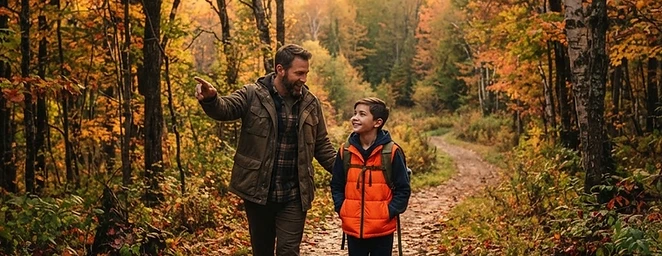
You and your child are hiking up a steep, muddy embankment toward your hunting spot. Your child starts to lose their footing on the loose soil while carrying their unloaded firearm.
What should your child do to prioritize safety in this moment?
STEP ONE FOR EVERY YOUNG HUNTER
Hunter Education comes first
Most states require a Hunter Education certificate before a young hunter can buy a license, and it is the most important training your child will get. The Academy builds the habits at home. Your state's official course makes them count.
HUNTING SAFETY EDUCATION · AGES 5-17
RAISE A SAFE, CONFIDENT YOUNG HUNTER.
Guide your kids through interactive hunting safety missions, real decision drills, and earned trophies. One payment, no subscription.