
SEPTEMBER 19, 2026
Teaching Young Hunters How to Properly Store and Organize Hunting Gear
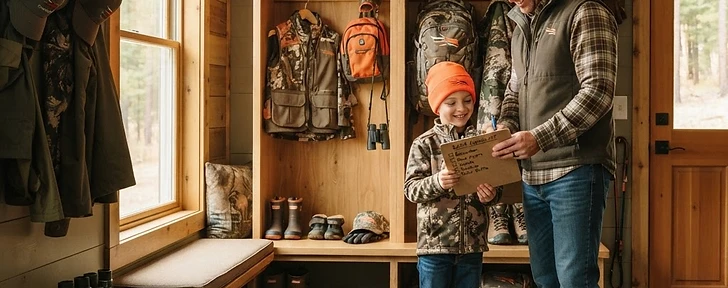
Building a Foundation of Responsibility
Hunting is a discipline that extends far beyond the time spent in the woods. For young hunters, the experience begins at home with the preparation, maintenance, and organization of their gear. By teaching your child how to properly store and organize their equipment, you aren't just preventing lost items or damaged goods; you are cultivating a mindset of responsibility and respect for the tools of the trade.
The Role of Organization in Field Safety
When a child knows exactly where their compass, first-aid kit, and thermal layers are, they are far more capable of handling unexpected situations in the field. Cluttered gear bags often lead to panic when an item can’t be found under pressure. Systematic storage fosters confidence. When your child learns to keep their gear organized, they are also learning to audit their equipment—a critical skill that ensures safety gear is always in working order.
Creating a System for Success
Developing an organizational system together turns a chore into a collaborative project. Here are some strategies to get your young hunter involved:
- Categorize by Purpose: Use clear plastic bins or mesh bags to group items by function (e.g., survival/first aid, navigation, scent control, and clothing). Labeling these bins helps children visualize where everything belongs.
- The 'Post-Hunt' Ritual: Make cleaning and storing gear part of the hunting experience. After every outing, items should be inspected for damage, cleaned of mud or debris, and returned to their designated spot.
- The Inspection Checklist: Create a physical or digital checklist that your child must verify before every hunt. This teaches them to verify that essential safety equipment is present before leaving the house.
- Proper Storage Conditions: Teach your child about the environment. Gear like optics should be kept in humidity-controlled areas, while clothing should be stored in scent-free containers to maintain effectiveness.
Caring for Specialized Equipment
Different types of gear require different care. For instance, teaching a child to dry their boots properly prevents mildew, while explaining why optics should be stored with lens caps on teaches them to protect the investment of high-quality glass. When kids understand why they must store items a certain way—such as keeping batteries out of electronic devices to prevent corrosion—they are more likely to comply with safety protocols.
Encouraging Ownership Through Involvement
When children participate in the maintenance of their gear, they feel a greater sense of ownership. Ask them to help choose the storage containers or color-code the gear bags. This involvement transforms them from passive recipients of gear into active managers of their equipment. As they grow, you can gradually shift the responsibility of gear maintenance entirely onto them, with your role evolving into that of a supervisor who conducts periodic 'safety audits.'
Conclusion: Start the Journey Today
Organizing gear is a practical, repetitive skill that reinforces the gravity of the sport. It emphasizes that hunting is not just about the hunt itself, but about the preparedness and stewardship that make the hunt successful. Whether your child is just starting their journey or is already a seasoned youth hunter, establishing these habits now will serve them for a lifetime.
At BHH Youth Hunters Academy, we provide age-matched safety lessons that guide parents and children through every step of the hunting process, from gear management to ethical field behavior. Join our community today to start your child’s comprehensive journey into safe, ethical, and prepared hunting.
TRY IT — A REAL ACADEMY DECISION DRILL
The Post-Hunt Inspection

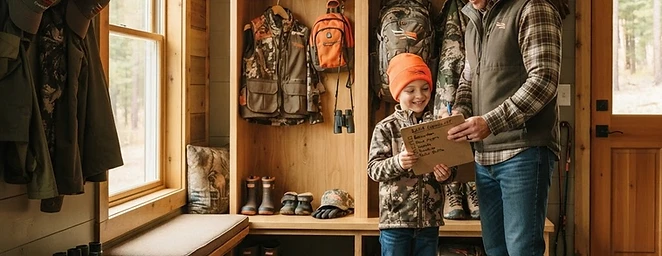
Your child returns from a rainy day in the woods. They are eager to get inside to have a snack, but their boots are caked in mud and their pack is wet. They want to throw everything in the closet to deal with it later.
What is the most responsible action to take immediately after entering the home?
STEP ONE FOR EVERY YOUNG HUNTER
Hunter Education comes first
Most states require a Hunter Education certificate before a young hunter can buy a license, and it is the most important training your child will get. The Academy builds the habits at home. Your state's official course makes them count.
HUNTING SAFETY EDUCATION · AGES 5-17
RAISE A SAFE, CONFIDENT YOUNG HUNTER.
Guide your kids through interactive hunting safety missions, real decision drills, and earned trophies. One payment, no subscription.