
SEPTEMBER 18, 2026
Teaching Young Hunters How to Properly Handle and Carry Firearms in the Field
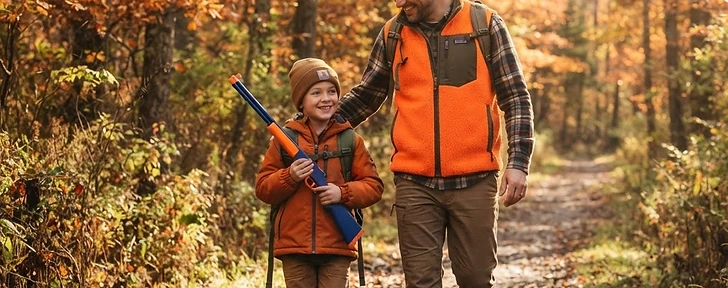
Mastering the Carry: Building Safe Habits in the Woods
When you head into the woods with your young hunter, the most important gear they carry isn't their binoculars or their warm jacket—it is their firearm. Teaching your child how to carry a firearm while traversing varied terrain is one of the foundational steps in hunter education. At BHH Youth Hunters Academy, we believe that how a child carries their firearm reflects their respect for the sport and their commitment to the safety of everyone around them.
The Importance of Muzzle Control
The primary goal of any carry technique is to maintain constant control of the muzzle. No matter what position the firearm is in, the muzzle must always be pointed in a safe direction—away from people, your own body, and your equipment. When walking, climbing over logs, or navigating dense brush, it is easy for a young hunter to get distracted. By teaching them specific carry methods, you provide them with a structured way to stay safe regardless of the environment.
Three Essential Carry Techniques
Depending on the terrain and the distance to your destination, different carries are appropriate. Here are the three most common methods every young hunter should master:
- The Muzzle-Up Carry: This is often the safest carry for groups. By keeping the muzzle pointed toward the sky, the hunter ensures that even in a fall, the firearm is not directed at anyone nearby. It is an excellent choice for navigating uneven ground.
- The Two-Handed Carry (Ready Carry): This position gives the hunter the most control. By holding the stock with one hand and the forestock with the other, the child can easily maintain the muzzle in a safe direction while staying ready for a potential encounter. It requires more stamina, which is why it is best for shorter distances.
- The Sling Carry: Used for long treks to a hunting blind, the sling carry keeps the firearm secure on the shoulder. However, it requires extra vigilance. The muzzle must still be pointed upward or backward, and the hunter must ensure the firearm doesn't slip off while they are walking.
Adapting to the Environment
Terrain dictates safety. If you are crossing a creek or navigating heavy brush, a young hunter must understand that the 'standard' carry might need to change. For example, when moving through dense brush, the muzzle-up carry helps avoid snagging the barrel on branches or accidentally dipping the muzzle into mud. Always teach your child to pause, secure their firearm, and assess the path before continuing.
Building Muscle Memory
Safety isn't something a child learns in one day; it is built through repetition. Before heading out, practice these carries at home with an unloaded firearm or a blue-gun trainer. Have your child demonstrate each carry while walking through the living room or backyard. When they can switch between carries smoothly and safely without thinking, they are ready to transition those skills to the field.
A Parent's Role in Supervision
As a parent, your eyes are their backup. Walk behind or beside your child to monitor their muzzle discipline constantly. If you see their muzzle dip or waver, pause the hunt immediately to provide gentle, corrective feedback. Positive reinforcement—praising them for a safe carry or a correct decision—is far more effective than just pointing out mistakes.
Start Your Safety Journey Today
Proper firearm handling is just the beginning of a safe hunting career. At BHH Youth Hunters Academy, we provide interactive, age-matched lessons that make learning these technical skills easy and engaging for kids ages 5-17. Whether your child is just starting their journey or preparing for their first big season, our curriculum is designed to help parents and kids learn together. Enroll today and build a foundation of safety that lasts a lifetime.
TRY IT — A REAL ACADEMY DECISION DRILL
The Creek Crossing

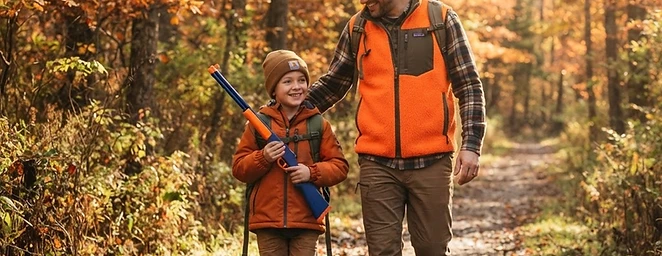
You and your 12-year-old are trekking to your stand. The path ahead requires crossing a muddy, slippery creek bed with several large, mossy rocks. The terrain is uneven, and your child is currently using the 'two-handed carry'.
What should your child do before attempting to cross the slippery rocks?
STEP ONE FOR EVERY YOUNG HUNTER
Hunter Education comes first
Most states require a Hunter Education certificate before a young hunter can buy a license, and it is the most important training your child will get. The Academy builds the habits at home. Your state's official course makes them count.
HUNTING SAFETY EDUCATION · AGES 5-17
RAISE A SAFE, CONFIDENT YOUNG HUNTER.
Guide your kids through interactive hunting safety missions, real decision drills, and earned trophies. One payment, no subscription.