 BHH YOUTH HUNTERS ACADEMYBHH ACADEMY
SEPTEMBER 16, 2026
Teaching Young Hunters the Fundamentals of Ethical and Safe All-Terrain Vehicle Use

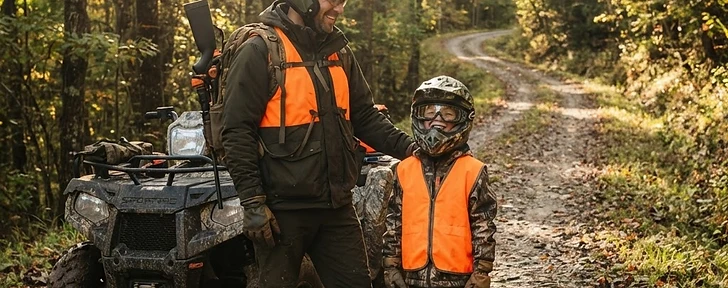
Integrating ATV Safety into Your Hunting Education Plan
For many families, the All-Terrain Vehicle (ATV) is an essential tool for accessing remote hunting grounds. However, for a young hunter, an ATV is a piece of heavy machinery that requires maturity, physical strength, and a high level of situational awareness. As parents, teaching your child how to operate these vehicles safely is just as important as teaching them marksmanship or wildlife identification.
The Foundation: Safety First, Utility Second
Before your child ever touches the handlebars of an ATV, they must understand that the machine is a tool for transport, not a toy for recreation. When we talk about hunting ethics, we often focus on the harvest, but responsible stewardship includes how we treat the land we hunt on. Riding recklessly damages sensitive habitats, scares off wildlife, and puts the rider at unnecessary risk.
Essential ATV Safety Rules for Young Hunters
- Right-Sized Equipment: Never allow a child to operate an ATV that exceeds their physical size or strength. They must be able to reach all controls comfortably while maintaining a proper riding posture.
- Required Protective Gear: A DOT-approved helmet is non-negotiable. Add goggles, gloves, long sleeves, and sturdy over-the-ankle boots to ensure your young hunter is protected from debris and potential falls.
- Speed Management: Teach your child to ride at a speed that allows them to react to unexpected terrain changes, such as hidden stumps, washouts, or wildlife crossing the trail.
- Passenger Limitations: Most youth-model ATVs are designed for one rider only. Teach your child that passengers are never allowed, regardless of the distance or the urgency.
- Communication Protocols: Always maintain a line of sight or use a pre-determined check-in system if you are riding in separate vehicles. Never let a young hunter venture out of your sight in dense cover.
Ethical Riding and Land Stewardship
Part of being an ethical hunter is respecting the land. ATVs can cause significant soil erosion if driven through sensitive riparian zones or off-trail in protected areas. Teach your child that the best hunter is one who leaves no trace of their passage. By sticking to established trails and avoiding mud-bogging or steep, loose slopes, you instill a lifelong respect for the environment that supports the game you are pursuing.
Preparing for the Field
If you plan on using an ATV to transport gear or harvested game, practice the loading process at home in a controlled environment. Explain the shift in the machine's center of gravity when it is loaded down. An ATV handles differently when it is empty versus when it is carrying a tree stand or a cooler, and your child needs to understand these dynamics before they are miles from the truck.
Start Your Safety Journey Today
Teaching your child to navigate the woods safely is a marathon, not a sprint. By incorporating ATV safety into your broader hunting curriculum, you are building a foundation of responsibility and situational awareness that will serve them for years to come. At BHH Youth Hunters Academy, we provide age-matched safety lessons designed to help parents and children navigate these complex topics together. Start your journey with us today and ensure your next adventure is a safe one.
TRY IT — A REAL ACADEMY DECISION DRILL
The Muddy Trail Decision
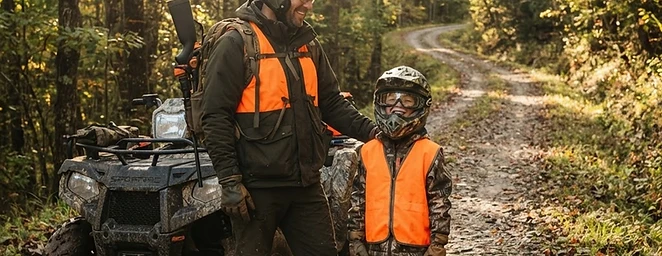
You and your 14-year-old are riding ATVs toward your hunting stand. A heavy rain has washed out a section of the main trail, leaving a deep, muddy rut that looks difficult to navigate. Your child asks if they can try to power through it to save time.
What is the safest and most ethical response?
HUNTING SAFETY EDUCATION · AGES 5-17
RAISE A SAFE, CONFIDENT YOUNG HUNTER.
Guide your kids through interactive hunting safety missions, real decision drills, and earned trophies — all from one free parent account.