
AUGUST 3, 2026
Teaching Firearm Responsibility: A Parent’s Guide to Safe Gun Handling at Home
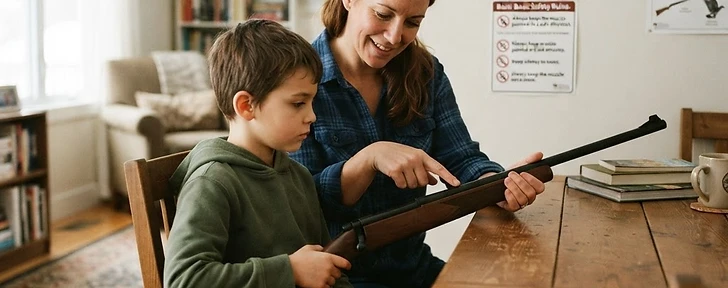
Building a Foundation of Safety at Home
Many parents assume that hunter safety begins the moment they step into the woods. However, the most effective habit-building happens long before the gear is packed. Teaching your child how to handle firearms safely in the comfort of your home is the best way to ensure those habits become muscle memory before they ever encounter a live target.
The Philosophy of 'Respect, Not Fear'
When introducing children to firearms, your goal should be to instill a deep sense of respect rather than fear. Fear can lead to hesitation, which is just as dangerous as carelessness. By treating firearms as tools that require specific, unwavering protocols, you normalize safe behavior. Start by explaining that a firearm is an inanimate object that only performs as well as the person operating it.
Essential Home-Based Safety Drills
Before handling any firearm, ensure every piece of equipment is verified as unloaded. Utilize blue guns (inert training aids) or dummy rounds to practice your mechanics. Focus on these core pillars:
- Muzzle Discipline: Practice moving through a room while keeping the muzzle pointed in a 'safe direction' at all times. Use a colored piece of tape on the wall to identify the safe zone.
- Trigger Finger Discipline: Teach your child to keep their finger indexed along the receiver or outside the trigger guard until they are ready to fire. This is a habit that must be practiced thousands of times to become automatic.
- Verifying the Condition: Teach the 'check-check-check' method. Every time a firearm is picked up, the child must immediately open the action and physically/visually verify that it is unloaded.
Setting Clear Rules for Storage
Safety doesn't end when the practice session is over. Your home storage practices are the ultimate lesson in responsibility. Involve your child in the process of locking up gear. Explain why we use safes, trigger locks, and separate storage for ammunition. When children understand the 'why' behind the locked door, they are less likely to view the firearm with forbidden curiosity and more likely to view it as a serious piece of equipment that demands adult supervision.
The Role of Consistent Supervision
Even a child who can recite the rules perfectly needs direct, one-on-one supervision. When you are training, put your phone away. Focus entirely on their movements. If you see a lapse in protocol, stop the session immediately, discuss the error, and reset. Consistency is the secret ingredient to long-term safety success. If you let a 'minor' slip slide by at home, they will likely repeat it in the excitement of a real-world hunting environment.
Moving Toward the Field
Once your child demonstrates flawless safety mechanics in a controlled home environment, they are better prepared for the sensory-rich experience of the field. Remember, the goal isn't just to teach them how to hunt; it is to teach them how to be a safe, responsible steward of the outdoors. The habits you build today will last them a lifetime.
Are you ready to take the next step in your child’s journey? BHH Youth Hunters Academy provides comprehensive, age-matched safety lessons that bridge the gap between home-based practice and ethical field performance. Join our community of dedicated parents and start your structured safety curriculum today.
TRY IT — A REAL ACADEMY DECISION DRILL
The Living Room Drill

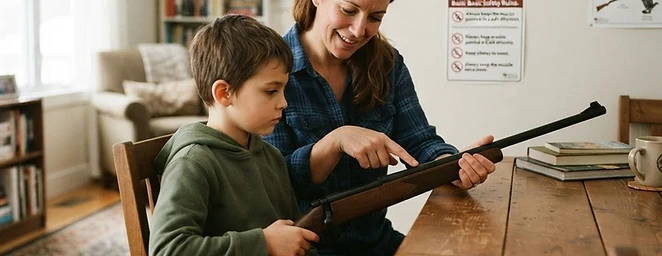
You are practicing safe gun handling in the living room with your 10-year-old using a dummy rifle. Suddenly, your child picks up the rifle from the table to show you how they would shoulder it, but as they pivot, the muzzle sweeps across the television screen where the rest of the family is sitting.
What is the immediate, correct way to address this situation as a parent?
STEP ONE FOR EVERY YOUNG HUNTER
Hunter Education comes first
Most states require a Hunter Education certificate before a young hunter can buy a license, and it is the most important training your child will get. The Academy builds the habits at home. Your state's official course makes them count.
HUNTING SAFETY EDUCATION · AGES 5-17
RAISE A SAFE, CONFIDENT YOUNG HUNTER.
Guide your kids through interactive hunting safety missions, real decision drills, and earned trophies. One payment, no subscription.