
NOVEMBER 21, 2026
How to Practice Firearm Safety at Home With Kids
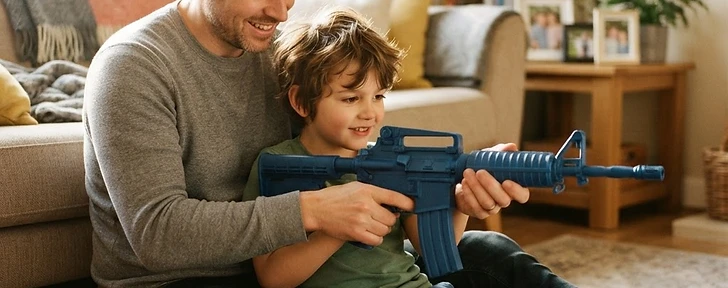
You can effectively teach firearm safety at home by using dedicated training tools and establishing a routine of supervised, dry-fire drills in a controlled environment. Practicing in your living room allows your child to master handling techniques without the pressure or live ammunition distractions of the field. By focusing on muscle memory and the fundamental safety rules, you ensure these behaviors become second nature before your child ever steps into the woods.
Establishing the Safety Rules
Before you pick up any training equipment, revisit the core rules of firearm safety. These rules should be recited and practiced every single time you handle a prop or training rifle.
- Treat every firearm as if it is loaded.
- Always keep the muzzle pointed in a safe direction.
- Keep your finger off the trigger until you are ready to shoot.
- Be sure of your target and what lies beyond it.
Setting Up Your Training Environment
Designate a specific room in your home as the 'Safety Training Zone.' Ensure that all real firearms are locked securely away in a safe or cabinet. Use only dedicated training firearms, airsoft guns without CO2, or wooden dowels to represent the barrel to ensure total safety during your lessons.
When working on hunting safety for kids guide protocols, create a mock target on the wall. This gives your child a visual reference point for muzzle control. Have them practice 'clearing' the firearm—physically checking the chamber—whenever they pick it up or change positions. This is a crucial step to build discipline.
Practicing Physical Handling and Positioning
Once the rules are understood, move into physical handling. Use these drills to build competence:
- The Safe Carry: Practice how to carry a firearm safely while walking around the room. Demonstrate the 'muzzle-up' and 'muzzle-down' positions and explain why the safety must be engaged.
- Obstacle Navigation: Place pillows or chairs in the room. Have your child demonstrate how to navigate over or around these obstacles while maintaining safe muzzle control at all times.
- The Resting Hand: Teach your child to keep their hand off the trigger guard entirely, resting their finger on the stock or along the frame of the firearm.
Reinforce these lessons by working through our youth hunter safety courses alongside your child to ensure you are teaching industry-standard terminology and techniques.
How this ties into Hunter Education
Practicing these drills at home directly prepares your child for the firearm handling and range portions of their official Hunter Education course. During the state-certified field day, instructors will look for the exact habits you are building today, such as consistent muzzle discipline and checking the action. Keep in mind that home practice is a supplement, not a replacement; your child must still complete their official state-mandated Hunter Education course to be legally certified. Understanding why Hunter Education matters for kids will help you explain to your child why these home drills are the foundation of their future in the outdoors.
Assessing Readiness
If you aren't sure if your child is ready to move from these living room drills to a live range, take our hunter safety readiness quiz to help identify areas that need more attention. Building confidence at home is the most responsible way to prepare for the field. Start your age-matched safety lessons today at BHH Youth Hunters Academy.
TRY IT — A REAL ACADEMY DECISION DRILL
The Living Room Drill

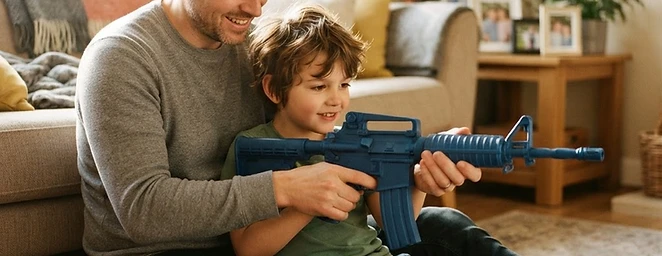
You are practicing safe carrying techniques in the living room with your child. Your child accidentally trips over a rug while holding their training rifle. What is the first thing they should do?
Choose the best reaction for your child to take if they stumble while holding the rifle.
STEP ONE FOR EVERY YOUNG HUNTER
Hunter Education comes first
Most states require a Hunter Education certificate before a young hunter can buy a license, and it is the most important training your child will get. The Academy builds the habits at home. Your state's official course makes them count.
HUNTING SAFETY EDUCATION · AGES 5-17
RAISE A SAFE, CONFIDENT YOUNG HUNTER.
Guide your kids through interactive hunting safety missions, real decision drills, and earned trophies. One payment, no subscription.