COURSE DETAILS

FREE PREVIEW · NO ACCOUNT NEEDED · SCOUTS · AGES 9–12

WILDLIFE ENCOUNTERS & PREDATOR AWARENESS

Read the first 2 lessons right here — narration included, exactly as your child would see them. Sit down with them and try it now.

FREE LESSON 1

REAL RISKS, RANKED HONESTLY

Real Risks, Ranked Honestly

Ask most people what's dangerous in the woods and they'll say bears, cougars, and snakes. Ask the data, and it answers differently: in North America, the wild creature most likely to actually harm a hunter is the TICK a bug smaller than an apple seed. Tick-borne illnesses affect hundreds of thousands of people every year, while fatal bear attacks across the whole continent average just a few. Bees and wasps cause more deaths than bears, cougars, and snakes combined.

This isn't to say big animals deserve no respect they deserve enormous respect, and this course teaches exactly how to give it. The point is proportion: the hunter who's terrified of a bear ambush but skips tick checks has the risk exactly backwards. Real preparation matches effort to actual risk: rigorous about the small threats, calm and drilled about the big ones.

There's a second reason to get this right: fear ruins hunts. A hunter who's genuinely comfortable in the woods because they know the encounter protocols cold sits stiller, stays out longer, and enjoys every hour more. Knowledge is what turns the woods from a place of imagined dangers into what it really is: home territory. That's what this course delivers.

  • The most dangerous wild animal to hunters is the tick — not the bear
  • Match effort to actual risk: rigorous about small threats, calmly drilled on big ones
  • Knowing the protocols cold replaces fear with comfort — and comfort makes better hunters

FIELD NOTE · Quiz your family: 'What's the most dangerous animal in our woods?' Compare their answers to the data — then check whether your family's habits match the real risk ranking.


FREE LESSON 2

BLACK BEARS: AVOIDANCE, THE ENCOUNTER, AND BEAR SPRAY

Black Bears: Avoidance, the Encounter, and Bear Spray

Black bears the bear most hunters will ever encounter are shy, food-obsessed, and overwhelmingly conflict-avoidant. Avoidance is your first tool: make noise when moving through thick cover or noisy streams (surprise is the ingredient in almost every bad encounter), watch for fresh sign tracks, scat, torn logs, claw-marked trees and give any food source you find (berry patches, carcasses) a wide berth. A carcass with fresh bear sign means leave the area, period.

The encounter protocol: if you see a bear that hasn't seen you, quietly back away the way you came. If it HAS seen you stand your ground, group up with your partners, raise your arms, and speak firmly and calmly ('Hey bear'). Never run: running triggers a chase response, and bears sprint over 30 mph. Back away slowly at an angle, keeping the bear in view. A bear standing on its hind legs isn't threatening it's trying to see and smell better. Watch instead for warnings: jaw-popping, huffing, ground-slapping, or a bluff charge that veers off. Answer all of them the same way: stand tall, keep talking, keep backing away.

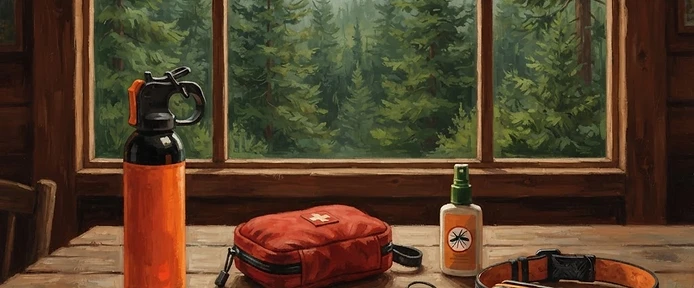
Bear spray is the proven tool and it deserves practice like anything else on your belt. Carried WHERE YOU CAN REACH IT (chest or belt holster not buried in your pack), deployed when a charging bear closes inside about 30 feet: safety clip off, aim slightly down to create a cloud the bear must run through, and give a 1–2 second burst. Studies show spray stops aggressive bears more reliably than firearms in surprise encounters because it needs no precision under panic. And the rarest case, an actual black bear ATTACK: fight back with everything you have, targeting the face and nose. You do not play dead with black bears (that advice belongs to defensive grizzly encounters a different protocol for a different animal).

  • Avoid the surprise: noise in thick cover, read fresh sign, give food sources a wide berth
  • Seen by a bear: stand tall, group up, talk firmly, back away at an angle — never run
  • Bear spray reachable and practiced: clip off, aim low, cloud burst inside 30 feet — and fight back if a black bear attacks

FIELD NOTE · If your family carries bear spray, practice the draw with your mentor (holster to ready position, clip off) until it takes under two seconds. An unreachable can is expensive decoration.

THE REST OF THIS MISSION

FINISH THE MISSION AND EARN THE TROPHY

  • Coyotes, Cougars, and the Confidence Rule
  • Snakes: Prevention, Truth, and First Aid
  • The Small Stuff: Ticks, Stings, and Bug Defense
  • Camp Discipline: Preventing Encounters Before They Start
  • 7 scenario drills and safety checks with instant feedback
  • The mission trophy, added to your child's trophy case
CREATE YOUR FREE PARENT ACCOUNT

NO CARD REQUIRED · TAKES ABOUT A MINUTE

Wildlife Ready

WILDLIFE READY

LOCKED

FREE PREVIEW · KEEP GOING FOR FREE

CREATE FREE ACCOUNT