FREE LESSON 1
KNOW THE BIRD: BIOLOGY THAT SHAPES THE HUNT

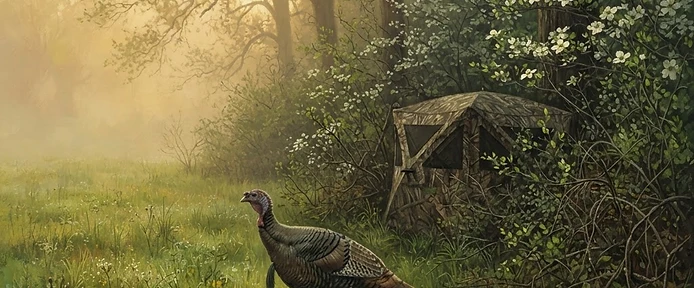
Everything about turkey hunting flows from the bird itself. The wild turkey's defining feature is its EYESIGHT: a field of view near 270 degrees, motion detection several times sharper than ours, and full color vision. A deer might forgive a slow movement; a turkey at 100 yards will not. This single fact explains the entire toolkit — full camouflage including face and hands, total stillness, and setups that hide movement rather than scent (a turkey's nose, mercifully, is nothing special).
The spring hunt is built on breeding season behavior. Toms gobble to announce themselves to hens — from the roost at dawn, and on the ground through the morning. Normally, hens go to the gobbler. The hunter's whole strategy inverts nature: by yelping like a hen that WON'T come, you challenge the tom to break the rules and come to you. That's why a 'henned-up' gobbler (one already surrounded by real hens) is so hard to call — he has no reason to leave.
Learn the daily rhythm: roost at night, fly-down at first light, feeding and strutting through the morning, midday loafing, then a drift back toward the roost by evening. Learn the vocabulary of the flock: gobbles (toms advertising), yelps (the basic hen conversation), clucks (contentment), purrs (close-range calm), cutting (excited hen), and the alarm PUTT — the sharp note that means a turkey has seen something wrong, and your hunt is probably over. Know the bird, and the strategy writes itself.
- Turkey eyesight is the ruling fact: near-270° vision, elite motion detection, full color
- Spring calling inverts nature — you play a hen that won't come, challenging the tom to break the rules
- Daily rhythm: roost, fly-down, morning strut, midday loaf — and the alarm putt ends everything
FIELD NOTE · Listen to recordings of all six calls with your mentor — gobble, yelp, cluck, purr, cutt, and putt — until you can name each one blind. The putt matters most: it's the sound of being busted.