COURSE DETAILS

FREE PREVIEW · NO ACCOUNT NEEDED · SCOUTS · AGES 9–12

FIELD DRESSING & MEAT CARE

Read the first 2 lessons right here — narration included, exactly as your child would see them. Sit down with them and try it now.

FREE LESSON 1

THE HARVEST IS A RESPONSIBILITY

The Harvest Is a Responsibility

The moment you recover an animal, the hunt changes jobs. Up to now, everything was about safety and the ethical shot. From this moment on, everything is about the food because an animal converted to a freezer full of meals is the entire point, and an animal wasted through carelessness dishonors everything that came before.

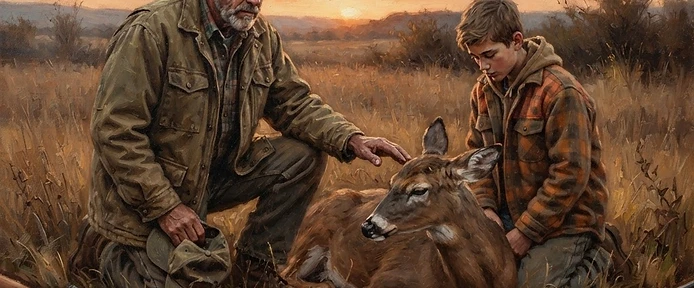
Start the way generations of hunters have: with a moment of respect. Kneel, put a hand on the animal, and take it in. This isn't ceremony for ceremony's sake it resets your mindset from excitement to responsibility. Then handle the legal duties immediately: tag or record the harvest exactly as your state requires, BEFORE moving the animal. Tagging rules vary by state, but the principle never does: paperwork first, then work.

Know the stakes: a deer yields roughly 40 to 70 pounds of finished meat dozens of family meals. Every step you'll learn in this course exists to protect that yield. Most 'gamey' or spoiled venison isn't the deer's fault or the recipe's fault. It's a game care mistake, and it's almost always preventable.

  • Recovery flips the job: from taking the animal ethically to protecting the food completely
  • Respect moment first, then legal tagging BEFORE the animal is moved
  • Bad venison is almost always a game care mistake — and preventable

FIELD NOTE · Look up your state's exact tagging/harvest-reporting requirement with your mentor — paper tag, app, or phone-in — and walk through doing it step by step.

FREE LESSON 2

THE GAME CARE KIT

The Game Care Kit

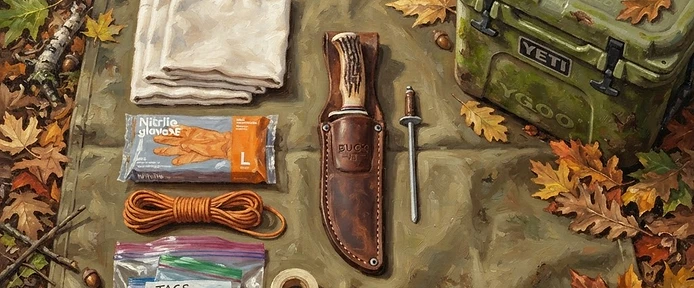
Look at the kit in the picture this is what turns a harvest into clean, safe food. The core: a sharp fixed-blade or sturdy folding knife (a sharp knife is a SAFE knife dull blades slip), a small sharpener, nitrile gloves (several pairs they tear), and white cotton game bags that let air flow while keeping dirt and flies off.

The support crew: paracord or rope for positioning and dragging, zip-top bags for the heart and liver if your family eats them (many do they're excellent), paper towels, and a few gallons of clean water in the truck. And the anchor of the whole system: a big cooler with ice, waiting at the tailgate. In warm weather, the cooler isn't optional it's the difference between food and waste.

Two rules make the kit work. First: it's packed BEFORE the season and lives with your hunting gear a kit at home helps nobody kneeling over a deer at dusk. Second: everything stays clean. Bags stay sealed until used, the knife gets wiped between tasks, and gloves get changed when they tear. Clean in, clean out.

  • Core kit: sharp knife, sharpener, gloves, white game bags — packed before season
  • Cooler with ice waiting at the truck is the system's anchor, especially in warm weather
  • Everything stays clean: sealed bags, wiped blades, fresh gloves

FIELD NOTE · Assemble your game care kit with your mentor this week using the picture as a checklist. Pack it in a dedicated bag that lives with your hunting gear.

THE REST OF THIS MISSION

FINISH THE MISSION AND EARN THE TROPHY

  • Field Dressing: Why, When, and the Golden Rules
  • Cool, Clean, Dry: The Three Commandments
  • Transport, Hanging, and the Aging Question
  • Processing, the Freezer, and the Table
  • 7 scenario drills and safety checks with instant feedback
  • The mission trophy, added to your child's trophy case
CREATE YOUR FREE PARENT ACCOUNT

NO CARD REQUIRED · TAKES ABOUT A MINUTE

Field to Table Provider

FIELD TO TABLE PROVIDER

LOCKED

FREE PREVIEW · KEEP GOING FOR FREE

CREATE FREE ACCOUNT