FREE LESSON 1
HABITAT: THE SCIENCE OF ANIMAL HOMES

Every wildlife question eventually comes back to habitat — the combination of food, water, shelter, and space an animal needs, arranged so the animal can actually use them. That last part matters: a cornfield a mile from any cover feeds no deer, because deer won't cross a mile of open ground to eat. Biologists call the way habitat pieces fit together 'arrangement,' and it's why the best wildlife land looks patchy, not tidy.
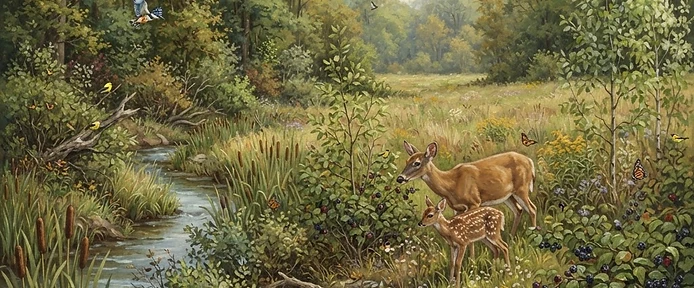
Look at the picture — it's a habitat masterclass. The deer stand at an EDGE: the line where forest meets meadow. Edges are wildlife magnets because they serve two habitats at once — browse and grass from the meadow, escape cover in the trees, all within a few bounds. The creek adds water; the berry bushes and saplings add food at deer height. Diversity of plants means diversity of food through the seasons.
The most important habitat concept in wildlife management is carrying capacity: the number of animals a piece of land can support through its HARDEST season — usually winter. Land doesn't hold as many deer as it feeds in June; it holds as many as it feeds in February. When animal numbers exceed carrying capacity, the habitat itself degrades — over-browsed plants die, and the land supports fewer animals for years. That single concept explains most of what wildlife managers do.
- Habitat = food, water, shelter, space — arranged so animals can actually use them
- Edges, where two habitat types meet, are wildlife magnets
- Carrying capacity: land supports what it can feed in its HARDEST season, not its easiest
FIELD NOTE · Walk a field edge with your mentor and count wildlife signs (tracks, trails, droppings, browse marks) along the edge versus 100 yards into the open and 100 yards into the woods. The edge will win — see it yourself.