 BHH YOUTH HUNTERS ACADEMYBHH ACADEMY
OCTOBER 7, 2026
Teaching Young Hunters the Importance of Effective Wildlife Scanning and Target Identification
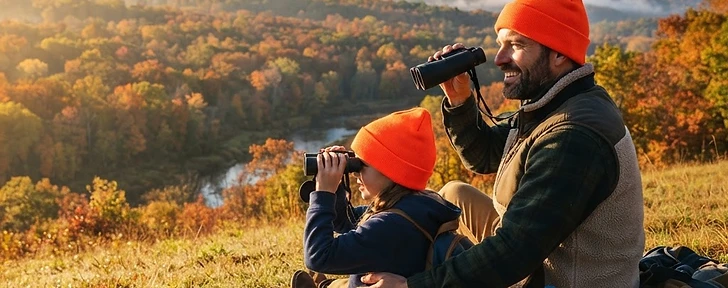
Mastering the Art of Visual Discipline in the Woods
When we take our children into the field, one of the most vital skills we can cultivate is their ability to see the world around them. While the excitement of the hunt often centers on the harvest, the real work of a skilled hunter happens long before a firearm is ever raised. Teaching your child how to effectively scan their environment and positively identify a target is the cornerstone of hunter safety.
The Difference Between Looking and Seeing
Many young hunters start by 'looking' at the forest—simply glancing at the trees and hoping to spot movement. As parents, our goal is to teach them to 'see' the habitat. This means breaking down the landscape into smaller, manageable sections. Encourage your child to scan systematically, looking for patterns, colors, and textures that don't belong in the natural setting, rather than just waiting for a deer to walk by.
Practical Scanning Techniques for Young Hunters
To help your child develop strong observational habits, introduce these techniques during your next practice session:
- The Grid Method: Imagine the field or forest in front of you is divided into a grid. Start at the bottom left and scan slowly across a small section before moving up to the next row. This prevents the eyes from darting around randomly.
- The 10-Second Pause: Encourage your child to stop and observe a specific patch of woods for at least 10 seconds. Wildlife often reveals itself through small movements—the flick of an ear or the sway of a tail—that are only visible to the patient observer.
- Peripheral Awareness: While focusing on a specific target area, teach your child to be aware of what is happening in their periphery. This helps in spotting movement that might otherwise be missed by a tunnel-vision gaze.
The Gold Standard: Positive Target Identification
Scanning is only half the battle. Once your child spots movement, the most critical lesson begins: positive identification. We must instill in our youth that if there is even a sliver of doubt, there is no shot.
Before ever placing a finger on a trigger, your child must be able to identify:
- The Animal: Is it the correct species? Is it legal game for the season?
- The Specifics: Does the animal meet any specific requirements, such as antler points or gender mandates, according to your state wildlife agency regulations?
- The Backdrop: What is behind the animal? Are there other hunters, vehicles, or buildings? Never take a shot where you cannot clearly see the terrain behind your target.
Cultivating Patience and Ethical Decision-Making
It is natural for a young hunter to feel a rush of adrenaline when they finally spot a buck or a turkey. Our job as mentors is to help them regulate that excitement. Remind them that hunting is not a race. If they lose sight of the animal while adjusting for a better view, that is perfectly okay. A safe hunt where no shot is taken is always superior to a rushed shot that leads to an ethical failure.
By practicing these scanning techniques at home—perhaps by playing games where you spot birds or squirrels in the backyard—you can build your child's confidence. When they learn to master their own visual focus, they become not just better hunters, but safer and more responsible stewards of the woods.
Ready to put these skills into practice? We encourage you to start your journey with age-matched safety lessons today at the BHH Youth Hunters Academy. Together, we can prepare the next generation to be safe, ethical, and observant hunters.
TRY IT — A REAL ACADEMY DECISION DRILL
The Distant Movement

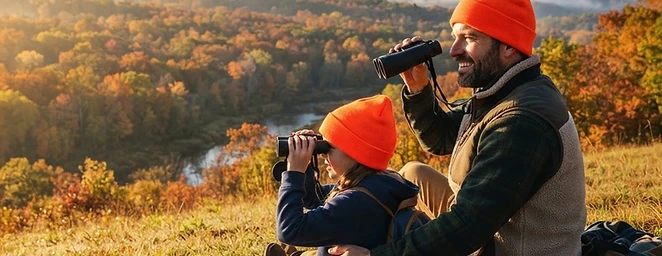
You and your child are sitting in a ground blind. Your child whispers, 'I see brown movement in the brush about 80 yards out!' It is low light, and the brush is thick. Your child starts to raise their rifle to get a better look through the scope.
What is the safest and most responsible action for your child to take right now?
HUNTING SAFETY EDUCATION · AGES 5-17
RAISE A SAFE, CONFIDENT YOUNG HUNTER.
Guide your kids through interactive hunting safety missions, real decision drills, and earned trophies — all from one free parent account.