 BHH YOUTH HUNTERS ACADEMYBHH ACADEMY
AUGUST 27, 2026
Teaching Young Hunters Essential Situational Awareness in the Woods

Why Situational Awareness Matters for Young Hunters
When we think about hunter safety, our minds often jump immediately to firearm handling or identifying game. While those are foundational, there is an overarching skill that ties every aspect of the hunt together: situational awareness. For a young hunter, the woods can be an overwhelming environment filled with unfamiliar sights, sounds, and physical obstacles. Teaching your child to remain aware of their surroundings is one of the greatest gifts you can give them as a mentor.
Situational awareness is the ability to perceive what is happening around you, understand what those signals mean, and predict how they might affect safety or the success of the hunt. It is a mindset that shifts a child from a passive passenger in the woods to an active, engaged participant.
The Three Pillars of Field Awareness
To break this down for young minds, consider teaching them to monitor three specific areas during every outing:
- The Immediate Environment: This includes the terrain underfoot, hidden obstacles like deadfall or uneven ground, and the structural integrity of their position (such as a ground blind or tree stand area).
- The Broader Landscape: Understanding the wind direction, changes in light, and the locations of other members in your hunting party.
- The Wildlife Context: Recognizing movement that isn't just the target game—such as other hikers, non-target wildlife, or changes in the behavior of birds and squirrels that might signal a nearby predator or visitor.
Practical Exercises for Building Awareness
Developing this "mental map" doesn't require a hunting license. You can start these drills during simple hikes or backyard camping trips.
- The 'Stop and Listen' Drill: Every 15 minutes, stop walking. Ask your child to close their eyes and identify three distinct sounds they hear. This trains the brain to filter out ambient noise and focus on environmental cues.
- The 'Directional Check': Periodically ask your child to point toward where you started, where the sun is, or where their hunting partner is located. This builds an internal compass.
- The 'Scan and Describe' Technique: Have your child stop and scan the woods in a slow, 180-degree arc. Ask them to describe one thing they see that is moving, one thing that is fixed (a specific tree or rock), and one potential hazard, like a patch of slippery moss or a low-hanging branch.
Managing the 'Tunnel Vision' Trap
One of the biggest hurdles for youth hunters is 'tunnel vision'—the tendency to focus so intensely on a potential target that all other awareness disappears. This is natural, but it is dangerous. As parents, we must teach our children that the hunt only begins after they have confirmed their surroundings.
Encourage your child to practice 'wide-angle' vision. If they see an animal, instruct them to pause, take a breath, and consciously look left and right before moving forward or preparing for a shot. By breaking the cycle of focus, they remain in control of the situation rather than being controlled by the excitement of the moment.
Integrating Safety into Every Trip
Situational awareness is not a one-time lesson; it is a habit built through consistent practice. Always check your state wildlife agency regulations regarding youth hunter requirements and safety mandates as you progress. Encouraging your child to be the 'eyes' of the hunt helps them take ownership of safety.
Are you ready to build a stronger foundation for your child's outdoor adventures? Visit the BHH Youth Hunters Academy today to start age-matched safety lessons designed to turn young enthusiasts into responsible, observant, and ethical hunters.
TRY IT — A REAL ACADEMY DECISION DRILL
The Distraction Drill

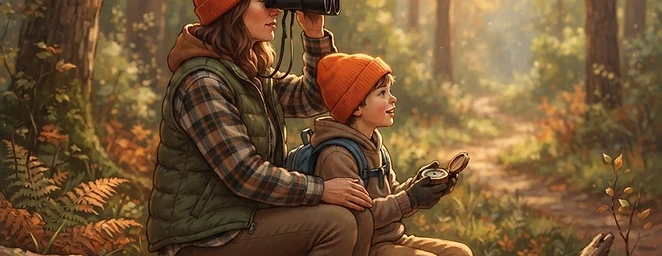
You and your child are sitting in a ground blind. Your child spots a deer moving about 100 yards away and immediately reaches for their gear, becoming entirely fixated on the animal. You notice a hiker walking on a public trail just 50 yards to the left of the deer's path.
What should your child do in this moment?
HUNTING SAFETY EDUCATION · AGES 5-17
RAISE A SAFE, CONFIDENT YOUNG HUNTER.
Guide your kids through interactive hunting safety missions, real decision drills, and earned trophies — all from one free parent account.