 BHH YOUTH HUNTERS ACADEMYBHH ACADEMY
SEPTEMBER 9, 2026
Teaching Young Hunters the Importance of Range Estimation and Ballistic Safety
Understanding the Foundation of Ethical Shooting
As your child begins their journey into hunting, one of the most critical skills they must develop is the ability to accurately estimate distance. Many new hunters struggle with depth perception in the field, often overestimating or underestimating the distance to their target. When it comes to hunting, range estimation is not just about accuracy; it is fundamentally about safety and ethics.
At BHH Youth Hunters Academy, we teach that an ethical hunter is one who knows their effective range and refuses to take a shot beyond it. Teaching your child to judge distance is a process that requires patience, practice, and the right tools.
The Role of Ballistics in Safety
Before heading to the woods, your child should have a basic understanding of how their firearm or bow performs. Understanding ballistics—the science of the projectile in flight—is vital. Explain to your child that gravity, wind, and the mechanics of their equipment all dictate where a projectile will land.
When a child understands that a bullet or arrow doesn't travel in a perfectly straight line forever, they begin to appreciate the need for clear target identification and a solid backdrop. This awareness is the core of ballistic safety: knowing exactly where your projectile is going and what lies behind it.
Practical Methods for Teaching Range Estimation
Helping your child develop an 'eye' for distance can be done through fun, interactive exercises. You don't even need to be at the range to start:
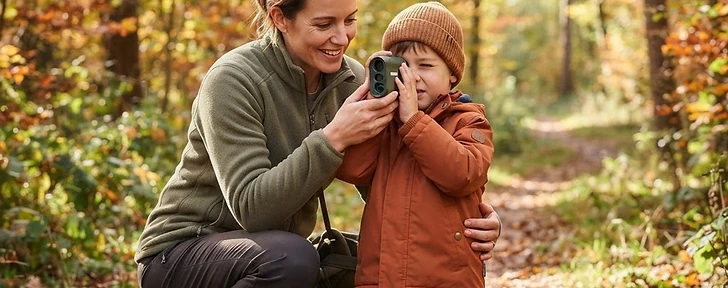
- The Guess-and-Check Game: During a walk or hike, ask your child to guess the distance to a specific tree or rock. Once they state their estimate, use a rangefinder to reveal the actual distance. This feedback loop is essential for calibrating their internal distance sensor.
- Reference Points: Teach your child to use known objects for comparison. For example, knowing that a typical deer stands about three feet tall at the shoulder provides a great baseline for gauging distance in the field.
- The Rangefinder Tool: While visual estimation is a great skill, we always encourage the use of modern laser rangefinders. Teach your child that using a rangefinder is a sign of a prepared, ethical hunter, not a shortcut.
Knowing Your Effective Range
Every hunter, regardless of age, has an effective range—the maximum distance at which they can consistently hit a vital zone under field conditions. For a child, this range is often shorter than they might expect.
Work with your child at the range to determine their limits. Have them shoot from different positions—sitting, kneeling, and using shooting sticks—to see how their accuracy changes. If they cannot consistently group their shots at 50 yards, their maximum ethical range is well below that. Encouraging them to practice restraint is one of the best lessons you can impart.
Safety Protocols for Ballistic Awareness
Always emphasize that the environment changes the equation. Rain, high winds, and awkward shooting angles can affect performance. If your child is struggling to gauge distance or if the terrain makes a safe shot difficult, teach them the most important rule: if there is any doubt, don't take the shot.
Remember that safety is a constant conversation. As your child grows, their skills will evolve, and their effective range may increase, but the fundamental commitment to ethical shooting and target awareness must remain unchanged. Check your state wildlife agency regulations for specific safety requirements and hunter education certification paths.
Start your journey today by exploring the age-matched safety lessons and interactive resources available here at BHH Youth Hunters Academy. We provide the tools you need to help your child become a safe, confident, and ethical steward of the outdoors.
TRY IT — A REAL ACADEMY DECISION DRILL
The Distance Dilemma

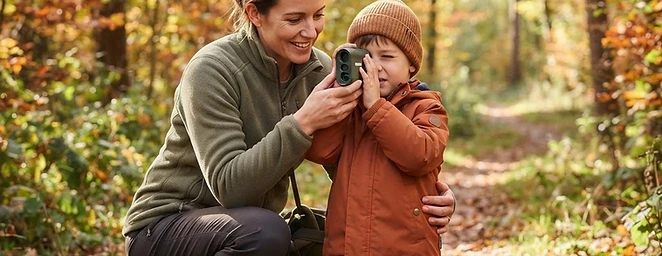
You and your child are sitting in a blind. A deer appears, but it is moving through heavy brush. Your child says, 'I think it's about 150 yards away, I want to take the shot.' You know from your earlier rangefinding that the target is closer to 200 yards, which exceeds your child's practiced comfort zone.
What is the safest and most ethical way to handle this?
HUNTING SAFETY EDUCATION · AGES 5-17
RAISE A SAFE, CONFIDENT YOUNG HUNTER.
Guide your kids through interactive hunting safety missions, real decision drills, and earned trophies — all from one free parent account.