 BHH YOUTH HUNTERS ACADEMYBHH ACADEMY
AUGUST 13, 2026
Teaching Young Hunters Positive Identification: The Importance of Target Acquisition
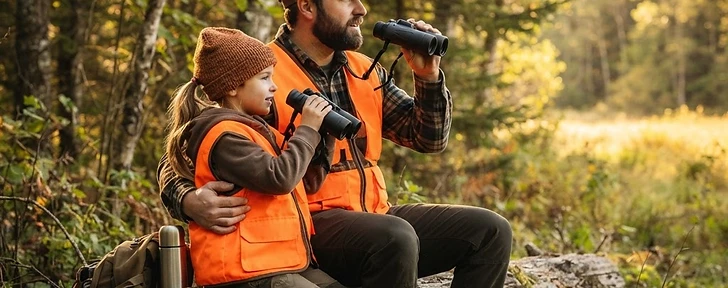
Why Target Acquisition Matters
For a young hunter, the excitement of seeing wildlife for the first time is immense. This adrenaline, while part of the joy of the outdoors, is also the primary reason why target acquisition—the process of positively identifying a target and confirming it is safe to harvest—must be the cornerstone of their training. At BHH Youth Hunters Academy, we believe that the 'shot' begins long before a finger ever touches the trigger. It begins with observation, verification, and absolute certainty.
The Three-Step Verification Process
Teaching your child a structured approach to looking at wildlife prevents impulsive decisions. We recommend the 'Verify-Identify-Assess' framework:
- Verify: Is the animal what we are legally licensed to hunt? Check for sex, age class, and any specific regulatory markings.
- Identify: Look beyond the animal. Is there movement in the brush behind it? Are there other animals or hunters obscured by the landscape?
- Assess: Does the animal provide a safe, ethical shot angle? If the answer to any of these is 'maybe' or 'no,' the only correct choice is to hold the shot.
Practicing Observation in the Field
Before your child is ever ready for a real hunt, you can practice these skills in the backyard or at a local park. Use binoculars to look at birds or squirrels and ask your child to describe not just the animal, but the environment around it. Ask them, 'If that were a deer, what is behind it? Is there a trail? Is there a tree that might deflect a bullet?' By making this a game of 'Environment Detective,' you turn a dry safety lesson into an engaging outdoor activity.
Managing Adrenaline
Young hunters often experience 'buck fever' or intense excitement. As a parent, your role is to be the calm voice in their ear. Teach them to breathe deeply and take a second to scan the horizon. A hunt is not a race; the animal isn't going to vanish because you took an extra ten seconds to confirm your surroundings. Remind your child that if they cannot clearly see their target, they do not have a target.
The Responsibility of the Shot
Ethical hunting is rooted in the respect for the animal and the safety of the public. Positive identification is the ultimate expression of that respect. By teaching your child to value the process of identification over the success of the harvest, you are raising a responsible steward of the land. Remember, once a projectile leaves the barrel, it cannot be called back. The weight of that responsibility is exactly what makes the preparation so vital.
Start Your Journey Today
Building these habits takes time, patience, and repetition. At BHH Youth Hunters Academy, we provide age-matched safety lessons designed to help you and your child navigate these complex decisions together. From foundational safety to advanced ethics, our modules are here to support your family's hunting journey. Visit our portal today to begin your next lesson in responsible, ethical, and safe hunting.
TRY IT — A REAL ACADEMY DECISION DRILL
The Dense Brush Dilemma

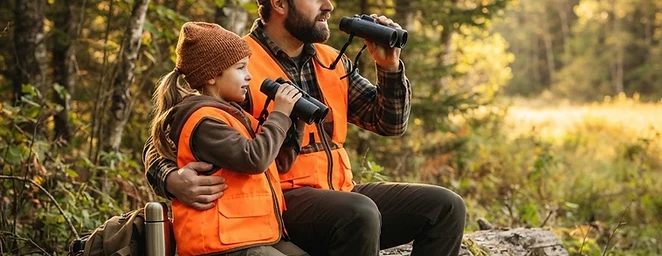
You and your child are sitting in a ground blind. A deer moves into a clearing, but the light is fading, and the background is a thicket of dense pine trees. Your child whispers, 'I see the deer's shoulder, should I take the shot?'
What is the best way to handle this situation?
HUNTING SAFETY EDUCATION · AGES 5-17
RAISE A SAFE, CONFIDENT YOUNG HUNTER.
Guide your kids through interactive hunting safety missions, real decision drills, and earned trophies — all from one free parent account.