 BHH YOUTH HUNTERS ACADEMYBHH ACADEMY
OCTOBER 16, 2026
Teaching Young Hunters the Fundamentals of Ethical and Safe Firearm Cleaning
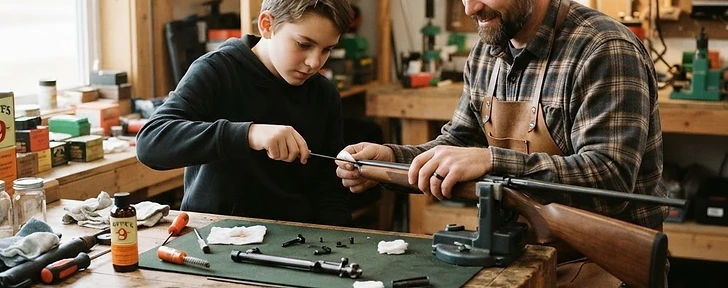
Building a Foundation of Respect for Hunting Gear
For many young hunters, the excitement of the field is the primary draw. However, a significant part of being an ethical and safe hunter involves what happens after the hunt: the maintenance and care of your equipment. Teaching your child the fundamentals of firearm cleaning is not just about keeping a tool in working order; it is a profound lesson in responsibility, attention to detail, and respect for the mechanics of safety.
Why Cleaning is a Safety Priority
A clean firearm is a safe firearm. Over time, residue from gunpowder, moisture, and debris from the field can build up in the action and barrel. If left unchecked, this buildup can cause malfunctions, such as failure to feed or, in more serious cases, barrel obstructions. By involving your child in the cleaning process, you are teaching them that safety does not end when the hunt is over. You are showing them that a reliable tool is the result of diligent care.
The Step-By-Step Process for Young Learners
Before you begin, ensure your workspace is well-lit, ventilated, and completely free of ammunition. Here is a simplified approach to introducing the routine to your young student:
- Safety First: Always verify that the firearm is unloaded by checking the chamber and magazine multiple times. Never have ammunition anywhere in the cleaning area.
- Disassembly: Guide your child through the basic field stripping of the firearm according to the manufacturer's manual. Focus on only the steps necessary for routine cleaning.
- Proper Tools: Teach them how to select the right cleaning rod, patches, and bore solvent. Explain why the correct caliber size is essential to avoid damage.
- The Scrub: Demonstrate how to push a solvent-soaked patch through the barrel and how to use a nylon brush for hard-to-reach areas. Explain that patience is more important than speed.
- Lubrication: Show them where to apply a small, precise amount of lubricant to moving parts. Emphasize that 'less is more' to prevent attracting dirt in the future.
- Reassembly and Function Check: Once clean, work together to reassemble the firearm and perform a safe function check to ensure everything is operating as intended.
Instilling Discipline and Focus
Cleaning a firearm requires focus—the same kind of focus needed while hunting. Use this time to have conversations about why we take care of our things. When children learn to value the precision of a mechanical tool, they develop a deeper appreciation for the role that tool plays in their hunting success. This quiet, deliberate work creates a bonding opportunity where you can reinforce the 'TAB-K' rules of safety in a calm, controlled environment.
Handling Mistakes and Maintaining Standards
If your child misses a spot or forgets a step, view it as a teaching moment rather than a failure. Explain the 'why' behind each step. For example, if they leave too much oil on the action, explain how that oil can trap debris the next time they are in the woods. By correcting them gently and consistently, you are building a habit of excellence. Remember that your child will mirror the care you put into your own gear. If they see you treat your equipment with discipline and respect, they will naturally follow your lead.
Continuing the Education Journey
Teaching your child to clean their equipment is a foundational skill that will serve them for a lifetime. It transforms the hunting experience from a purely outdoor pursuit into a holistic discipline of stewardship and preparation. Are you ready to dive deeper into the essentials of hunter safety? Start age-matched safety lessons with your child today at BHH Youth Hunters Academy and ensure they have the knowledge they need for every step of their hunting journey.
TRY IT — A REAL ACADEMY DECISION DRILL
The Cleaning Station Setup


You and your child are preparing to clean a rifle after a long weekend of hunting. You have cleared the firearm and removed all ammunition from the room. Your child reaches for a bottle of cleaning solvent and a handful of rags, but they have forgotten to check the area one last time for stray cartridges. What is the best way to proceed?
Choose the best immediate action to take:
HUNTING SAFETY EDUCATION · AGES 5-17
RAISE A SAFE, CONFIDENT YOUNG HUNTER.
Guide your kids through interactive hunting safety missions, real decision drills, and earned trophies — all from one free parent account.