 BHH YOUTH HUNTERS ACADEMYBHH ACADEMY
AUGUST 23, 2026
Teaching Young Hunters Ethical Shot Selection: A Parent’s Guide to Decision-Making
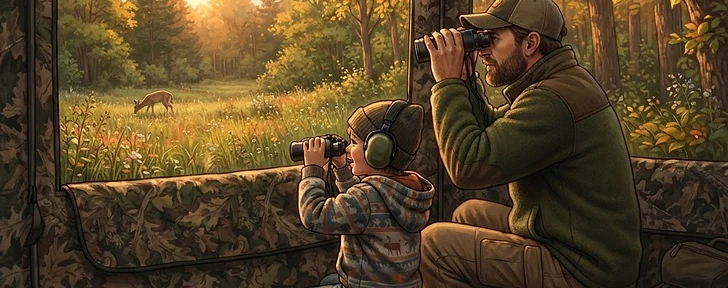
Understanding the Weight of the Shot
For a young hunter, the moment a target animal appears is a mix of excitement, nerves, and adrenaline. As parents, our primary role is to transition that energy into calm, analytical thinking. Teaching ethical shot selection is one of the most vital components of the hunting experience. It is the bridge between simply 'going hunting' and becoming a true conservationist who respects the wildlife they pursue.
Ethical hunting is built on the foundation of minimizing suffering and ensuring a clean, quick harvest. When your child is ready to step into the field, their technical shooting ability is only half the battle. The other half is the mental fortitude to hold back when conditions aren't perfect.
The Three Pillars of a Safe and Ethical Shot
Before your child even disengages the safety, they should be mentally running through a checklist. We teach young hunters to evaluate every potential shot based on these three pillars:
- Positive Identification: Does the animal meet the legal and ethical requirements for the hunt? Is it absolutely clear what they are looking at?
- Safe Backstop: What is beyond the target? Is the terrain safe for a projectile, or are there hidden risks, such as roads, homes, or other members of your hunting party?
- Optimal Placement: Does the animal present a broadside or slightly quartering-away angle that allows for a high-probability, humane shot? If the animal is obscured by brush or moving rapidly, the ethical choice is to wait.
Practicing the 'No-Go' Mindset
It is often said that the most important shot a hunter ever takes is the one they decide not to take. This is a powerful lesson in self-discipline. During your scouting trips or while sitting in a blind together, play 'scenario games' with your child. Point out animals and ask, 'Is that a safe shot? Why or why not?'
If the distance is too great, the animal is in a high-traffic area, or the light is fading too fast, encourage your child to vocalize why they are choosing to pass. This builds the 'muscle memory' of restraint. A child who learns to value the 'no-go' decision is a child who will be a lifelong, ethical steward of the outdoors.
Preparing for the Real Moment
When the real moment arrives, pressure can cloud judgment. As the parent, your calm demeanor is the anchor. Keep your voice steady and keep the communication open. Whispering simple reminders like, 'Take your time, check your background, and only shoot if you're 100% sure' can make all the difference.
Remember, the goal is not to fill a tag at any cost; the goal is to provide your child with a meaningful experience that teaches them about their role in the ecosystem. If the shot isn't perfect, passing is a victory in itself.
Start Your Journey Today
Every child develops at a different pace, and there is no substitute for structured, consistent learning. At BHH Youth Hunters Academy, we provide age-matched safety lessons designed to help you and your child grow together. From target acquisition to the ethics of the field, our platform gives you the tools to guide the next generation with confidence. Enroll today to begin your shared journey into responsible and safe hunting.
TRY IT — A REAL ACADEMY DECISION DRILL
The Decisive Moment

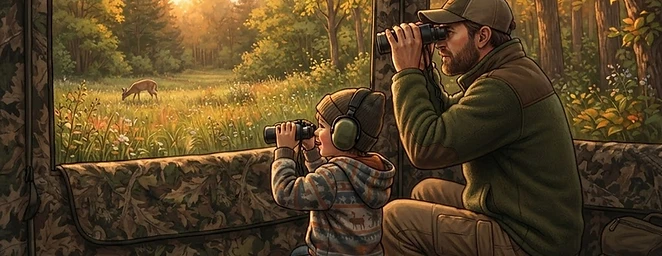
You and your child are sitting in a treestand. A buck walks into a clearing about 60 yards away. It is walking slowly through thick brush. Your child is excited and has the firearm raised, but the animal's vitals are obscured by tree branches.
What should your child do in this situation?
HUNTING SAFETY EDUCATION · AGES 5-17
RAISE A SAFE, CONFIDENT YOUNG HUNTER.
Guide your kids through interactive hunting safety missions, real decision drills, and earned trophies — all from one free parent account.