 BHH YOUTH HUNTERS ACADEMYBHH ACADEMY
JULY 25, 2026
Hunter Safety for Kids: What Parents Should Know Before Enrolling
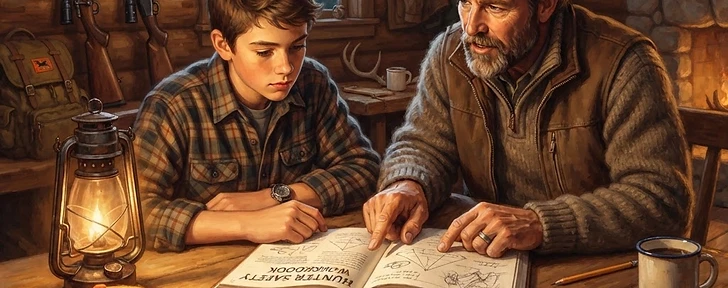
You want your kid to hunt safely. The question is where to start — and not every course is built with a 7-year-old, or even a 12-year-old, in mind.
Here's what to know before you enroll.
State certification vs. real readiness
Most states require a certified hunter education course before a youth can buy a hunting license. That certification matters — but it's usually a one-time event: a day of classroom or online modules and a test.
Real safety comes from repetition. Kids need the four rules of firearm safety drilled until they're automatic, not memorized for a quiz and forgotten by Saturday. The best approach is both: your state's certification when your child is old enough, plus ongoing, age-matched practice at home.
What a great youth course actually covers
Look for these five pillars in any program:
- The four rules of firearm safety (TAB-K). Treat every firearm as loaded. Always point the muzzle in a safe direction. Be sure of your target and beyond. Keep your finger off the trigger. Everything else builds on these.
- Positive target identification. Field marks, look-alikes, and the discipline to never shoot at sound, movement, or shadow.
- Tree stand safety. Falls from elevated stands injure more hunters than firearms do. Harnesses, lifelines, and three points of contact save lives.
- Tracking and recovery. Ethical hunting means finishing what you start — reading the hit, waiting with discipline, and recovering game respectfully.
- Ethics and land respect. Permission, gates, fair chase, and representing hunting well. This is what keeps land open to the next generation.
Age-matched content is everything
A 6-year-old and a 15-year-old need completely different lessons. Young kids learn through games and stories with a grown-up beside them. Pre-teens are ready for real procedures — carries, crossings, glassing. Teens preparing for their license need pressure-tested drills and the reasoning behind every rule.
That's why BHH Youth Hunters Academy splits everything into three paths: Trailblazers for young explorers, Scouts for mentored-age kids, and Pathfinders for teens approaching independent hunting.
How parents fit in
Kids don't learn safety from a screen alone. The programs that work put parents in the loop: you see progress, you practice together, and lessons include narration for younger readers. Plan for short, repeated sessions — 15 to 30 minutes — rather than one long cram.
Start where your child is
Whether your kid is 5 or 15, the right time to start safety education is before the first hunt, not after. Explore the academy's course paths and find the one that matches your young hunter today.
TRY IT — A REAL ACADEMY DECISION DRILL
Make the Call: Quiz Day

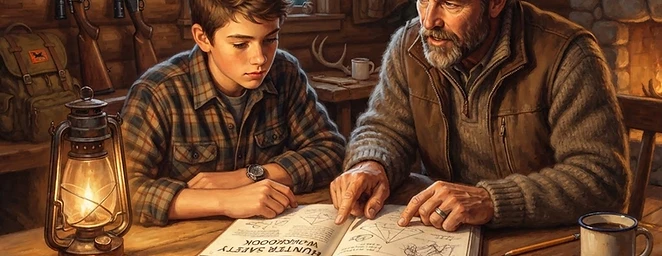
Your 11-year-old passed their online safety quiz with a perfect score. The youth season opens this weekend, and they're eager to put it to use.
What does that score actually mean?
HUNTING SAFETY EDUCATION · AGES 5-17
RAISE A SAFE, CONFIDENT YOUNG HUNTER.
Guide your kids through interactive hunting safety missions, real decision drills, and earned trophies — all from one free parent account.