 BHH YOUTH HUNTERS ACADEMYBHH ACADEMY
JULY 25, 2026
The 4 Rules of Firearm Safety Every Young Hunter Must Know (TAB-K)
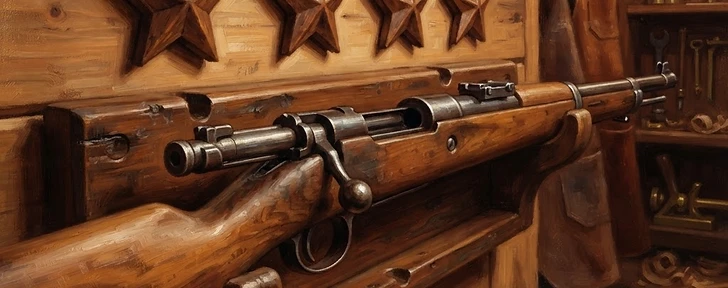
Every firearm accident in the field breaks at least one of four rules. Teach your child these four, drill them until they're automatic, and you've prevented nearly every way a hunt can go wrong.
Hunter educators call them TAB-K.
T — Treat every firearm as if it's loaded
Not "check if it's loaded." Treat it as loaded, always — even after you've checked. This rule exists because "I thought it was empty" is the most common sentence in accident reports.
How kids break it: Relaxing the moment someone says "it's unloaded."
Practice at home: Any time your child handles a firearm (or even a toy stand-in during practice), the same respect applies. No exceptions, no "just this once."
A — Always point the muzzle in a safe direction
The muzzle is like a laser that never turns off. Wherever it points, that spot must be safe to destroy. Ground ahead, sky, dirt bank — never a person, a house, or anything you can't see behind.
How kids break it: Turning their whole body — and the muzzle with it — when someone calls their name.
Practice at home: Play the "statue turn" game: when you call their name during practice, they lower the muzzle first, then turn just their head.
B — Be sure of your target and what's beyond it
A bullet doesn't stop at the target. Before any shot, a hunter must positively identify the animal — not a shape, not a sound, not movement — and know what's behind it. No safe backstop, no shot. Every time.
How kids break it: Excitement. The brain sees what it hopes to see, especially at first light.
Practice at home: Quiz them with photos: "What is it? What's behind it? Shot or no shot?" Make "no shot" a winning answer.
K — Keep your finger off the trigger until ready to shoot
The trigger finger rests straight along the frame — outside the trigger guard — until the exact moment the decision to shoot is made. Startle reflexes, stumbles, and cold hands all squeeze whatever the finger touches.
How kids break it: Habit from toys and video games, where the finger lives on the trigger.
Practice at home: Check their trigger finger every single time they pick anything up during practice. Praise the straight finger until it's automatic.
Why four rules instead of one
Here's the genius of TAB-K: the rules back each other up. Break one and the other three still prevent a tragedy. Break two and you're relying on luck. That's why safe hunters never treat any rule as optional — the redundancy is the safety.
Make it stick
One conversation won't build a habit. Short, repeated practice will. Our firearm safety courses teach TAB-K three different ways for three different ages — through games for young kids, field procedures for pre-teens, and pressure-tested drills for teens. Start your child's path today.
TRY IT — A REAL ACADEMY DECISION DRILL
Make the Call: The Fence Crossing

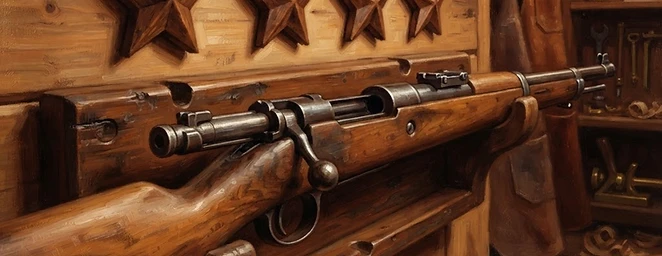
You and your young hunter reach a barbed-wire fence. They're carrying the (unloaded, action-open) practice rifle and start to climb over with it in one hand.
What should happen here?
HUNTING SAFETY EDUCATION · AGES 5-17
RAISE A SAFE, CONFIDENT YOUNG HUNTER.
Guide your kids through interactive hunting safety missions, real decision drills, and earned trophies — all from one free parent account.